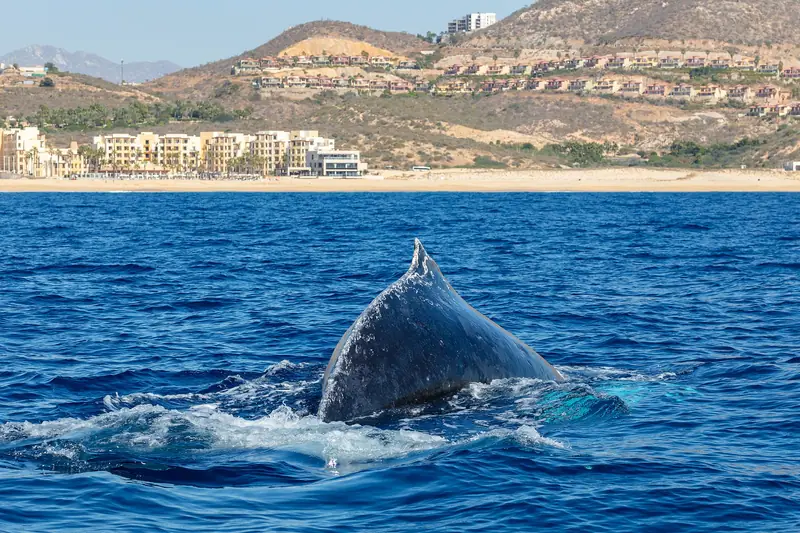
Every winter, humpback whales travel thousands of miles from cold northern waters to the warm sea around Baja California Sur to mate and give birth. Los Cabos is one of the easiest places in the world to see them, often just minutes after leaving the marina.
Here is what our local team tells guests who want to see whales in Cabo.
When is whale season in Los Cabos?
The official whale watching season in Los Cabos runs from about mid-December to mid-April. January to March is usually the best stretch, with the most whales and, often, the most action at the surface.
Early in the season you see more adults traveling and males competing. Later in the season, mothers with young calves become more common, which is a beautiful thing to watch.
Whale season also lines up with Cabo's best weather: sunny days, cool evenings and very little rain. It is high season, so book your boat early, especially around the holidays and Spring Break.
Which whales will you see in Cabo?
- Humpback whales: the stars of the show. They breach, slap their tails and fins on the water, and males sing long songs you can sometimes hear through a hydrophone or even through the hull.
- Gray whales: less common around Cabo itself. Most head to the lagoons farther north on the Pacific coast, but some pass along the Pacific side of Los Cabos.
- Others: once in a while, fin whales or even blue whales are spotted, and dolphins and the sea lions at Land's End are regular company.
Wild animals keep their own schedule, so no honest operator can promise a sighting. In the heart of the season, though, humpback sightings are very common.
What are the rules for whale watching in Mexico?
Whales in Mexican waters are protected, and whale watching is regulated by the federal government. In practice, that means:
- Only boats with a whale watching permit should run whale tours.
- Boats must keep a minimum distance, approach slowly from the side and limit how long they stay with each group of whales.
- No chasing, no cutting in front of the whales and no getting between a mother and her calf.
- Swimming with whales is not allowed.
If a whale chooses to come close to a stopped boat, that is the whale's decision, and it is magic when it happens. You can read more about protected areas and wildlife on the site of CONANP, Mexico's federal agency for natural protected areas.
Small boat, private yacht or sunset cruise: which is best?
- Small-boat tour: low to the water and fast to reach the whales. Best for wildlife lovers who do not mind a bumpy ride and some spray.
- Private yacht: more comfort, shade, a bathroom, food and drinks, and only your group on board. Perfect for families, older guests and celebrations. See our yacht charters in Cabo San Lucas.
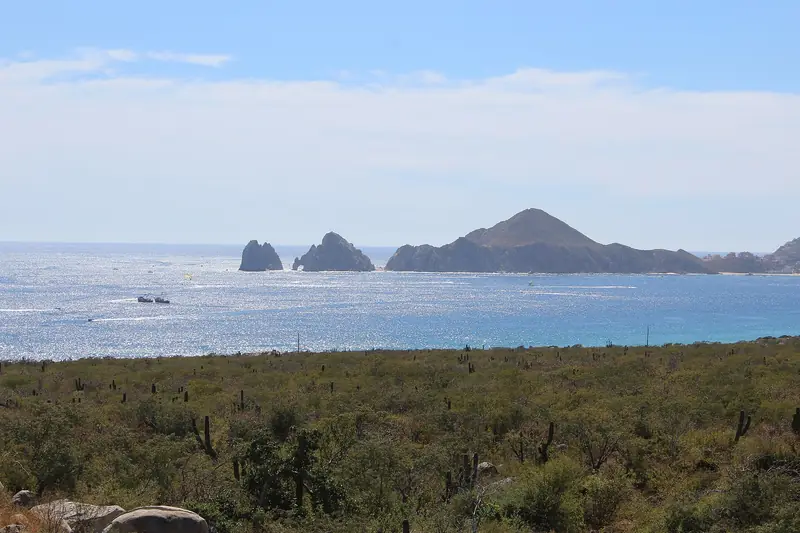
- Sunset cruise: not a dedicated whale tour, but in season many sunset sails see whales on the way out to El Arco.
Our tip for most groups: a private yacht for three or four hours in the morning. You get calm water, time to wait for the whales to surface again, and a snorkel stop afterward if everyone is warm enough. Our private yacht charter guide explains how to choose the boat and the length of the trip.
Prefer a classic small-boat tour? You can book one with our tours and activities in Los Cabos.
Can you see whales from shore in Cabo?
Yes. On many winter days you can see spouts and breaches from the beach, a restaurant terrace or a hillside villa, especially along the Tourist Corridor and the Pacific side. Bring binoculars and look for the white puff of a spout on the horizon.
Some of our ocean-view villas in Los Cabos make breakfast-with-whales a daily routine in February.
Tips for a great whale watching trip
- Go in the morning. The water is usually calmer, and in winter the wind often picks up in the afternoon.
- Dress in layers. It can feel cool on the water in January and February, especially on the ride back.
- Protect your eyes and skin. Polarized sunglasses help you spot whales under the surface glare. Use reef-safe sunscreen.
- Plan for seasickness. Take medicine about an hour before, eat something light and keep your eyes on the horizon.
- Bring the right camera setup. A zoom lens or a phone with good zoom helps because boats keep their distance. Use a phone strap.
- Be patient. Humpbacks can stay underwater for several minutes. The best moments often come right after everyone gives up and sits down.
What else can you do in whale season?
Whale season is high season, with perfect weather for almost everything. Pair your whale trip with a desert ATV tour, a camel ride on the beach, snorkeling at Santa María Bay, or a day trip to La Paz to swim with whale sharks when that season is open.
Want to compare months before you book? Read our month-by-month guide to the best time to visit Cabo.
Tell us your dates and group size and we will match you with the right boat. Message us on WhatsApp at +1 305-400-2155.
Common questions
What is the best month for whale watching in Cabo?
January, February and March are usually the best. February is a favorite: lots of whales, mothers with calves and great weather.
Are whale sightings guaranteed in Cabo?
No operator can guarantee wild animals, but in the middle of the season humpback sightings are very common.
Can you swim with whales in Cabo?
No. Swimming with whales is not allowed in Mexico. If you want to swim with a giant, a whale shark tour in La Paz is the regulated option in season.
Is whale watching good for kids?
Yes. For young kids, choose a private yacht in the morning, with shade, a bathroom and calmer water.
Plan your Los Cabos days with us
Yachts, villas, private drivers, chefs, security and activities, arranged by one local team that answers on WhatsApp.

Operation Manager at Cabo Diamond Services in Cabo San Lucas. Gabriel and the team plan yacht charters, villas, transportation, security and events in Los Cabos every week. Last checked November 13, 2026.